
The short version: At 3 years old, soccer is not really about soccer yet. It is about movement, coordination, and having fun with a ball, all wrapped in something that resembles the sport. Parents who expect drills, positions, or real gameplay at this age are often setting expectations that don’t match where a 3 year old actually is developmentally.
What a 3 Year Old Is Actually Ready For
At this age, kids are still building the basics: balance, coordination, following simple directions, and holding attention for a few minutes at a time. That is not a knock on any individual child. It’s just where most 3 year olds are developmentally, and it shapes what a soccer session should actually look like.
This means structured drills, positions, and real gameplay are not realistic expectations yet. What is realistic is short bursts of activity, lots of repetition, and a format that keeps kids moving without asking them to sit still, wait their turn for long stretches, or follow multi-step instructions.
What Good Looks Like at This Age
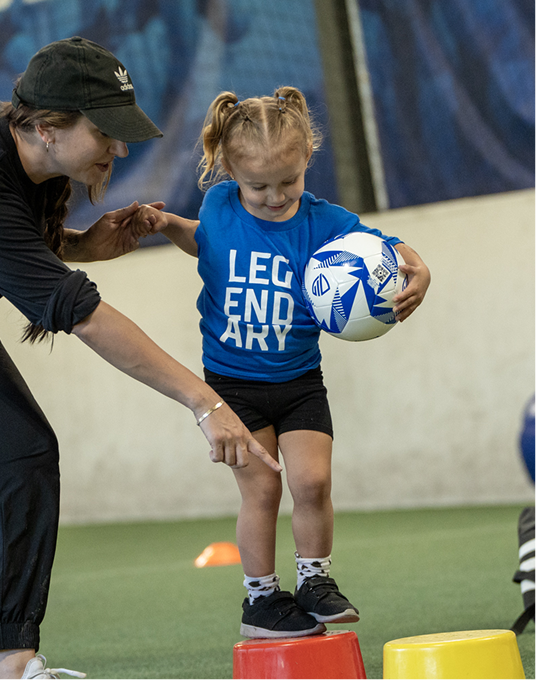
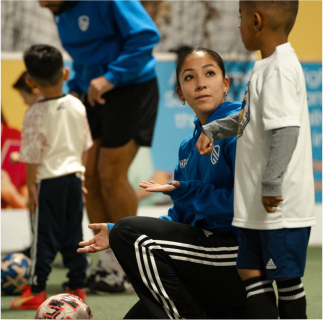
A well-run session for 3 year olds tends to prioritize touches on the ball over technique, and games over instruction. Think chasing, kicking, dribbling around cones shaped like an obstacle course, and simple games that happen to build coordination rather than formal skill-building disguised as fun.
Sessions are also short by design, generally in the 30 minute range, because that is closer to what actually holds a 3 year old’s attention. A coach’s job at this age is less about teaching soccer and more about keeping kids engaged, moving, and having a good enough time that they want to come back next week.
What Not to Expect (and Why That’s Okay)
It’s normal at this age for attention to wander mid-activity or for a session to look more like free play than structured soccer. That is consistent with where a 3-year-old actually is developmentally, not a sign that something is wrong. Real positions, sustained focus, and consistent rule-following are further down the development timeline, not something a 3 year old is expected to have figured out yet.
The goal at this stage is not competence. It’s exposure, comfort with movement, and a positive association with being active. The rest comes later.
Frequently Asked Questions
What age should kids start playing soccer?
This depends more on developmental readiness than a fixed age, but many programs designed for the youngest age groups start around 2 to 3 years old, with sessions built specifically around shorter attention spans and simple movement rather than structured play.
Should a 3 year old be in a structured class or just play for fun?
Both can work well at this age, as long as the structure is loose. A good class for 3 year olds should feel more like guided play than formal instruction, with plenty of room for a child to move at their own pace.
How long should a soccer session be for a 3 year old?
Sessions in the 30 to 45 minute range tend to work best at this age, since that is closer to what actually holds a 3 year old’s attention. Shorter, well-paced sessions with lots of variety tend to keep kids engaged far better than longer practices modeled after an older kid’s schedule.
Explore HPA
Every age has its own version of what a great start in soccer looks like. High Performance Academy builds its youngest-age programming around where kids actually are developmentally, not where a scoreboard says they should be. Explore HPA soccer programs.